
Interior Design in Malawi: A Growing Creative Career and Business Opportunity
From modern homes and hotels to offices, restaurants and affordable renovations, Malawian creatives can help shape spaces that work better, look better and reflect the people who use them.
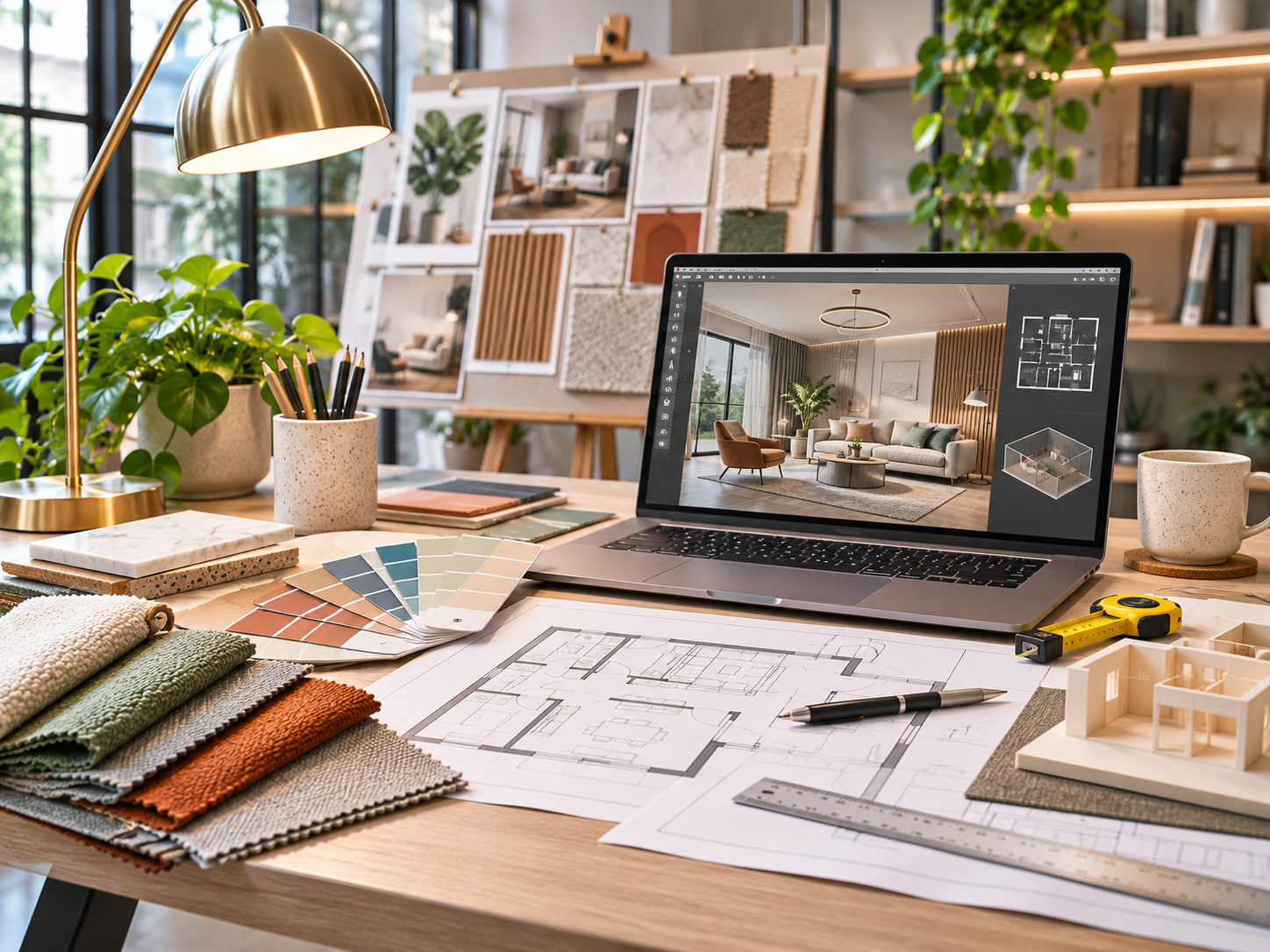
Imagine walking into a home where the furniture fits the room, daylight reaches the places it should, storage is useful and every finish has been chosen with care. Or a small restaurant whose layout makes service easier while giving customers a memorable experience. That is the value of interior design: not simply making a space beautiful, but making it functional, safe, comfortable and appropriate for its purpose.
For Malawi, this is an opportunity worth exploring. The country’s housing and urban development needs are substantial, while hotels, offices, retail premises and private homes all present different space-planning challenges. Interior design is still an evolving market, however, and a prospective designer must combine creativity with affordability, technical knowledge and sound business judgement.
Why interior design matters now
The growth of interior design in Malawi should not be confused with a guaranteed employment boom. Reliable statistics counting local interior design vacancies are limited. What we can measure is the broader need for better buildings, housing and living spaces.
Habitat for Humanity estimates the need for about 21,000 new homes per year, and reports that 58.9% of Malawi’s housing stock was categorized as substandard in the 2018 Population and Housing Census. Malawi’s Ministry of Lands, Housing and Urban Development also announced a 2026–2031 strategic plan targeting 135,000 affordable housing units. These figures are evidence of housing needs and policy intentions, not proof that all projects will employ interior designers.
Interior design can contribute when a building is safe and fit for occupancy: efficient small-room layouts, accessible circulation, resilient materials, useful storage, ventilation and appropriate furniture. More ambitious work may involve hotel experiences, professional offices, conference rooms or commercial showrooms. In a market where budgets are often tight, thoughtful design should begin with solving real problems.
Interior design goes beyond decoration
Interior decoration focuses on choices such as furnishings, colours and finishes. Interior design additionally considers how a space is planned and used, including circulation, lighting, ergonomics, accessibility, materials and the coordination of technical requirements. Work involving structural alterations, regulated building services or approvals must be undertaken with appropriately qualified professionals.
Residential interiors
Space plans, kitchens, living rooms, storage systems, finishes and furniture layouts for private homes and apartments.
Hospitality design
Guestrooms, reception areas, restaurants and guest experiences for lodges, hotels and cafés.
Commercial spaces
Offices, meeting rooms, retail outlets, salons, clinics and customer-facing service spaces.
Furniture and styling
Custom furniture briefs, product selection, styling, display areas and coordination with local artisans.
3D visualization
Digital floor plans, mood boards and rendered concepts that help clients see ideas before committing money.
Renovation support
Cost-conscious improvements to existing interiors, collaborating with contractors and qualified specialists.
These opportunities exist on a spectrum: some involve simple visual consulting and furniture layouts, while others require substantial professional experience, technical coordination or specialized credentials.
What could an interior designer earn?
There is no comprehensive, official Malawi-wide wage series specifically for interior designers that we could verify. A third-party Paylab salary survey provides an indicative benchmark, but it has an important limitation: the site states that it has fewer than 20 verified respondents for this occupation. Its figures should therefore be treated cautiously.
MK169,320
MK169,320–554,598
MK554,598
It is important to distinguish an employee’s salary from the fees charged by a self-employed designer. A design studio may invoice considerably more than an employee’s monthly pay, but it must cover software, travel, materials, contractors, marketing, taxes, delays and unpaid time. The business owner’s profit may be much lower than its revenue.
How Malawian designers can turn skills into income
Entrepreneurship offers several accessible entry points. An aspiring designer does not necessarily need a large showroom or warehouse to begin. A smaller service-led operation can start by selling plans and expertise, then expand its network of reliable suppliers and installers.
Room planning packages
Offer measurements, furniture plans, colour palettes, mood boards and shopping recommendations for one room at a time.
Home staging and styling
Help property owners present homes and rental accommodation effectively, using affordable and reusable furnishings.
Commercial makeovers
Support shops, salons, cafés and offices with customer flow, layout, lighting coordination and branded interiors.
3D presentation services
Create SketchUp models, rendered rooms and visual presentations for contractors, property developers and other professionals.
Custom furniture coordination
Develop furniture concepts and partner with carpenters and fabricators for production and installation.
Remote design consultations
Provide digital mood boards, video consultations and layout advice, while confirming measurements and on-site constraints.
Illustrative small-studio revenue example
Suppose an independent designer completes three room-planning packages at MK150,000 each and one small commercial concept package at MK450,000 in a month. These are hypothetical prices and sales volumes, used only to demonstrate the business model—not verified market rates.
Revenue is not profit. Subtract expenses, tax, labour, corrections, marketing and costs of acquiring clients. A new designer may have months without paying projects.
Working locally can itself be a competitive strength. Collaborate with carpenters, metalworkers, upholsterers, curtain makers, electricians and building professionals; consider locally sourced solutions where suitable; and maintain clear drawings, specifications and contracts.
What should an aspiring interior designer learn?
- Space planning: taking measurements, room anatomy, circulation and efficient furniture arrangements.
- Elements and principles of design: scale, balance, contrast, proportion, texture, colour and lighting.
- Technical representation: scaled floor plans, elevations, material schedules and presentation boards.
- SketchUp and visualization: 3D modelling and readable client presentations, with further rendering skills where appropriate.
- Materials and specifications: durability, maintenance, sourcing and alternatives suitable for local conditions.
- Project management: briefing clients, costing, planning, coordinating contractors and managing revisions.
- Professional boundaries: knowing when licensed architects, engineers, electricians or other qualified practitioners must be involved.
Learning should end with a portfolio, not just a certificate. A strong beginner portfolio might contain a carefully measured bedroom redesign, a small shop layout and a practical office makeover—each with the brief, mood board, floor plan, 3D visuals, proposed materials and a realistic budget.
A practical first project
Choose a real room with permission. Measure it, photograph it, identify the user’s main frustrations and create two layouts: an affordable improvement and a more ambitious concept. Explain the cost, expected benefits and trade-offs. That is more persuasive than a collection of attractive but unbuildable images.
Five steps to enter the emerging field
- Learn the fundamentals. Develop drawing, space-planning, materials and presentation skills through structured training and practice.
- Build three credible case studies. Show how each design answers a problem and respects a budget, not simply how the render looks.
- Connect with local professionals. Meet builders, property managers, carpenters, architects and small-business owners; learn their workflows and requirements.
- Offer one clearly defined service. Start with room layouts, 3D visualizations or consultations before taking on complex fit-out projects.
- Work professionally and keep learning. Use written agreements, assess safety and compliance, track costs, document projects and request referrals.
Malawi’s design market faces constraints—income inequality, construction costs, imported materials, foreign exchange pressure and a limited pool of clients able to pay for premium services. These are reasons to differentiate through practical value and appropriate pricing, rather than assuming that every new building will create a high-fee assignment.
Start creating spaces with purpose.
Explore Ace College of Media & Design’s Interior Design course and begin building practical skills in space planning, design principles, colour, surface treatments, SketchUp and project work.
References and data notes
Information checked November 2026. Housing figures measure needs or targets, not interior design employment. Paylab earnings figures are third-party estimates from a small sample and are subject to change.
- Habitat for Humanity. (2026). Malawi: Housing need and programmes. Provides the estimate of 21,000 homes annually and the 2018 housing-quality statistic.
- Ministry of Lands, Housing and Urban Development. (2026, October 19). Strategic plan launch in Lilongwe. Announces the 2026–2031 targets, not completed development.
- Paylab. (accessed November 2026). Interior Designer salary in Malawi. Gross monthly salary range; fewer than 20 verified respondents.
- Construction Industry Regulatory Authority. (2025). Commencement of the Construction Industry Act No. 28 of 2025. Construction-sector regulatory context.